Commentary: Pharmaceutical firms saved the world with COVID-19 vaccine in record time. But credit goes to others too
SINGAPORE: A twelvemonth since the COVID-19 pandemic hit the world, new vaccines have been approved and are starting to be delivered.
People accept begun to exist vaccinated in Europe and the United States. In Singapore, healthcare workers were the kickoff to receive the vaccination on Wednesday (Dec 30).
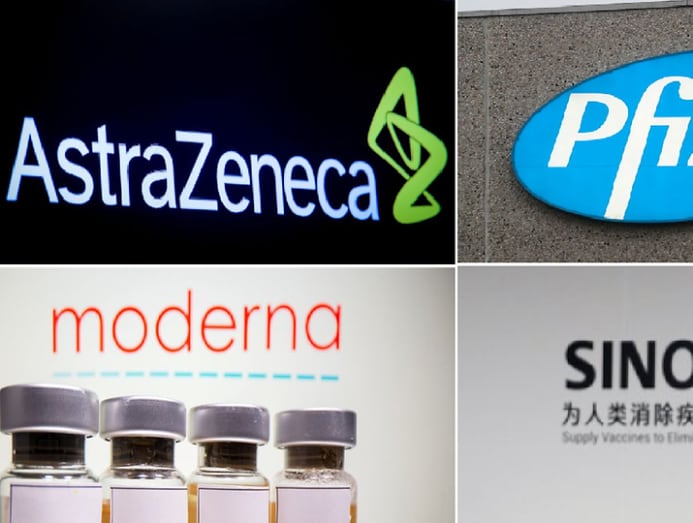
The first vaccine to receive approval was developed past the US multinational pharmaceutical company Pfizer and the German biotechnology house BioNtech.
This is one of around 200 projects in diverse countries racing to develop vaccines against COVID-19.
Others on the brink of approval are developed by Moderna in the Us, and AstraZeneca and Oxford University in the UK. Russian federation has begun to administer its Sputnik vaccine, with at to the lowest degree ii canonical for emergency use in Prc, developed by Sinovac and Sinopharm.
Given the scale of the pandemic, the amount of illness, the millions of lives lost, and the economic costs, the fiscal and reputational rewards to existence amidst the first in the race to develop effective vaccines are enormous.
READ: Commentary: Here's why taking the vaccine is necessary even if it's optional
READ: Commentary: A vaccine is on the horizon. Simply nearly Singaporeans are adopting a wait-and-see mental attitude
A Large TRIUMPH FOR Large PHARMA
That all this has been achieved in a year is seen equally a triumph by large pharmaceutical companies working in partnership with universities and governments.
Such progress generally takes more than like x years, and the costs of developing a successful new vaccine are ordinarily loftier, in the region of United states of america$i billion.
Beyond the research, development and testing, the production and distribution of vaccines on a large scale volition be a major undertaking.
In that location may exist demand for x billion or more doses in the coming year. The International Air Ship Clan (IATA) has estimated that distributing these amounts to 8,000 Boeing-747 cargo-plane loads.
READ: Commentary: Can Singapore be a major COVID-19 vaccine transshipment hub and save its aviation industry?
These rapid developments may requite the pharmaceutical industry an opportunity to repair its reputation. The other large corporations involved in distributing vaccines, the airlines and logistics firms, may also enjoy reputational benefits.
Is this a moment when the public perception of such large pharmaceutical multinational corporations gets a boost?
Listen to communicable diseases expert outline what'south needed to get a vaccine manufactured, transported and administered in our Heart of the Thing podcast:
BIG PHARMA'S POOR REPUTATION
That would be a welcome notion, at least for pharmaceutical companies who have suffered poor reputations in advanced nations for decades.
Award-winning healthcare commentator Ben Goldacre's 2022 volume Bad Pharma detailed a litany of precipitous practices by big pharmaceutical companies, influencing enquiry into effects of drugs, suppressing negative results, covertly commissioning research favouring the drugs and lobbying vigorously.
The opioid crunch in the The states is especially egregious. Later a long battle, Purdue Pharma, the makers of the notorious OxyContin drug, has gone into defalcation, and the erstwhile owners of the visitor, members of the Sackler family, are being sued for more reparations.
Fine art galleries and museums that have received donations from them are being pressed to render the funds and remove the Sackler name from their galleries.
Pfizer itself was the subject of a scandal in Nigeria in 1996 over a trial of a meningitis antibiotic, in which several children died. The episode inspired John le Carré's volume The Constant Gardner.
While the industry proclaims that it has since cleaned upwardly its deed, incertitude remains.
Too these acts of commission, the industry stands accused of acts of omission. It is not surprising that, as a commercial enterprise, in the pursuit of profits, and despite its enormous resources, the pharmaceutical industry has focused on some types of diseases and treatments and neglected others. Two areas stand out.
Showtime, the world faces a growing threat from antimicrobial resistance, every bit pathogens develop resistance to existing antibiotics faster than new ones are produced.
We face the prospect that common injuries become life-threatening and much surgery becomes impossible every bit no treatments tin resist infirmary-borne leaner, sending medicine back to the 19th century.
The returns to a private company from developing a new antibiotic do non repay the investment needed, despite the social benefits being vastly greater.
Second, the Earth Health System lists xviii neglected topical diseases (including dengue, rabies, trachoma, sleeping sickness, and river incomprehension) that continue to afflict populations in many poorer countries.
Large pharma has invested very little in developing treatments for them. Again, the commercial returns do not repay investment.
Happily, in the last few years, partnerships betwixt public bodies, charities, and pharma accept been forged to address these omissions.
One hopes these yield positive results. Nonetheless, the laggard role of the industry underlines its pursuit of individual proceeds and neglect of the public good.
READ: Commentary: Making sense of shifting goalposts in public policy and the science of COVID-19
READ: Commentary: What a global COVID-nineteen exit strategy looks like
A SHOT IN THE ARM FOR PHARMA
Against this background, the success of the pharmaceutical manufacture, riding to the rescue in the fight against COVID-19, may be a shot in the arm for the public view of large concern and a big public relations win.
Simply very large corporations have pockets deep enough to invest billions in these risky projects. Only they have the scientific expertise and experience to develop vaccines based on cutting edge technologies and mount the large-scale clinical trials necessary for approving from the regulators.
Nevertheless, the successful evolution of COVID-nineteen vaccines has not been the product of big business organisation alone. Rather it has depended on a combination of input from authorities, universities and other business sectors.
As in the case of Pfizer working with BioNTech, and AstraZeneca with researchers at the University of Oxford, large companies are cartoon on the expertise of newer, smaller bio-technology firms and academy-funded inquiry.
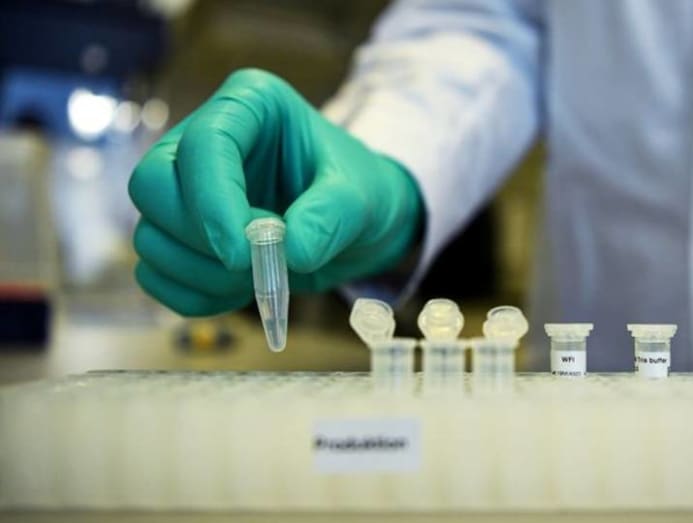
All these firms employ big numbers of scientists whose advanced didactics has enjoyed direct and indirect public funding. Big pharmaceutical business organisation draws on a highly skilled labour force whose skills and knowledge have been accumulated by public investment in pedagogy.
While the combination of public and private contributions has been essential, market competition has been a factor too.
The payoffs to winning the vaccine development race are likely to be very high (though AstroZeneca has given upwards some potential profits, offering to sell its vaccine closer to cost to developing countries).
READ: Commentary: Science goes viral, thank you to COVID-19. But there are roadblocks along the way
Governments committed to fast-tracking stringent blessing processes and buying billions of doses at an early on stage. Some manufacturers have received direct public funding.
There is no dubiousness Big Pharma has received a reputational heave considering of the successes of a few big companies this COVID-19 stricken year. The almanac Gallup poll in September testing American attitudes towards the pharmaceutical industry showed nigh a ten percentage betoken decrease in negative views of the sector.
But the next time you see a rise in the public opinion polls regarding Big Pharma'south piece of work in fighting COVID-19, think this has been a story of big firms cartoon on publicly funded education and research.
They are competing for an enormous market, with governments underpinning demand. They operate in framework of regulations that protects their intellectual belongings.
The vaccination programme that will ensure everyone who wants a vaccine gets a shot in the arm will exist a massive undertaking by national healthcare systems that involve frontline healthcare workers, not to mention requiring the logistical cold concatenation working at optimal levels to transport billions of vials.
Equally the prospect of mass vaccination brings an end of the pandemic into view, Big Pharma may be coming to the rescue, only it is non the whole story.
BOOKMARK THIS: Our comprehensive coverage of the coronavirus outbreak and its developments
Download our app or subscribe to our Telegram channel for the latest updates on the coronavirus outbreak: https://cna.asia/telegram
John Driffill is a Visiting Professor of Social Sciences (Economic science) at Yale-NUS College. He does research on macroeconomics and budgetary policy, institutions and economic performance, and European economies.
0 Response to "Commentary: Pharmaceutical firms saved the world with COVID-19 vaccine in record time. But credit goes to others too"
Post a Comment